The Cameras
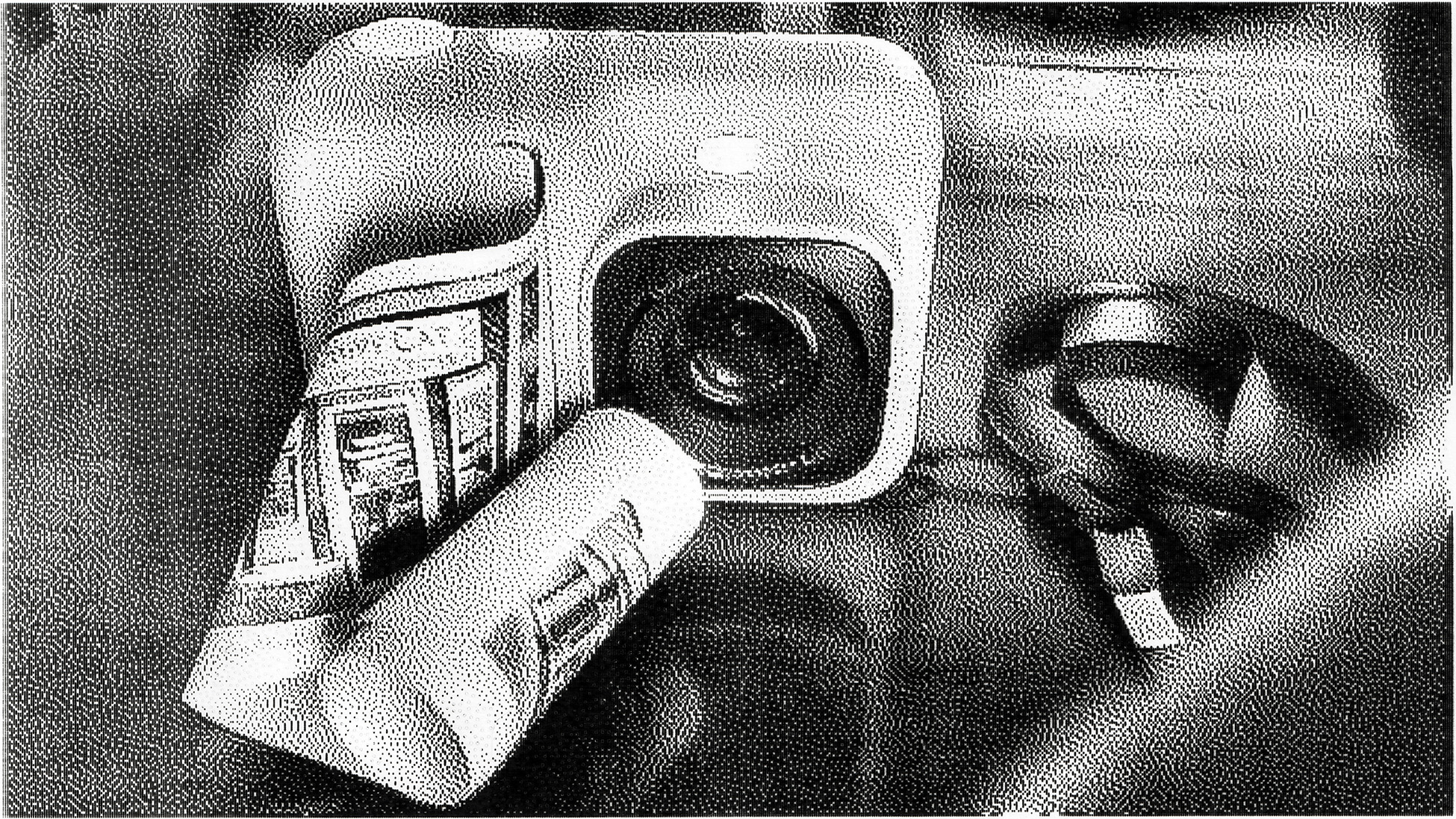
This isn't about who has the best camera. The most expensive camera used for this blog cost $24 CAD with free shipping. Any Hasselblad-owning, pixel-peeping pervies gonna get a black eye around here. You in Da Hood now, bitchez.
Masterbee P79 Instant Print Camera
- Cost: $13 CAD
- Claimed resolution: "48 MP" (it is not 48 MP)
- Actual resolution: Looks like a drunk 2 MP upscaled by someone who hates you
- Video: 1080p (allegedly)
- Print: Thermal, black and white, no ink
- Print format: Longer aspect ratio strip
- Screen: 2.4 inch IPS
- Storage: 32GB SD card included
- Modes: Grayscale printing, dot matrix printing, 3 colour depth levels
- Extra features: Selfie camera, games, music player, filters, frames
- Target audience: Children aged 3 to 12
- Actual user: A 57-year-old man with a pacemaker and a dockworker beanie
The Masterbee is a plastic toy camera designed for kids that spits out thermal prints on receipt paper. It claims 48 megapixels in the same way I claim to be 6 feet tall — technically a number has been stated, but nobody believes it. The prints are lo-fi, dithered, and look like they were faxed from 1991. They are glorious.
Etikez Funshot20 Instant Print Camera
- Cost: $13 CAD
- Claimed resolution: "48 MP" (still not 48 MP, they all claim this)
- Actual resolution: Same drunk 2 MP, different plastic shell
- Video: 1080p HD (hah!)
- Print: Thermal, black and white, no ink
- Print format: 4:3 cropped, slightly different from the Masterbee
- Screen: 2.4 inch
- Storage: 32GB SD card included
- Modes: Grayscale, time-lapse, continuous shooting, 6x zoom
- Extra features: Flash, filters, frames, games, front-facing camera
- Target audience: Children aged 4 to 12
- Actual user: Same 57-year-old man, still wearing the beanie
The FunShot 20 is the Masterbee's slightly different cousin. Same thermal printing technology, same wildly optimistic megapixel claims, same delightful awfulness. The 4:3 crop gives a different aspect ratio than the Masterbee's longer strip, which means the same scene looks different depending on which cheap camera I pulled out of my tactical pants pocket.
Q10 Printer Camera (Shenzhen Tianyuan Huitong Technology)
- Cost: $24 CAD
- Claimed resolution: 48 MP (narrator: it is not 48 MP)
- Actual resolution: The usual drunk 2 MP. You know the drill by now.
- Print: Thermal, black and white, no ink
- Print format: Strip, same spool format as the Masterbee
- Focus: Fixed. The ring on the lens is decorative. It does not focus. It is a lie made of plastic.
- Design: Rainbow stripes, landscape orientation, looks like a Polaroid OneStep had a budget knockoff child in Shenzhen
- Did I mention the stripes? IT HAS FUCKING STRIPES!!!!
- The stripes also make my camera openly gay. Has YOUR camera come out yet? Hm? HM?
The Q10 costs $24 because someone in a factory decided rainbow stripes were worth an $11 premium over a camera that takes identical photos. They were not wrong — I bought it. The decorative focus ring is my favourite feature because it commits so fully to the bit. It turns. It does nothing. It is the camera equivalent of a sports car spoiler on a minivan. I respect the audacity.
Binbinyouli Instant Print Camera (Shenzhen Binbinyouli Technology)
- Cost: $17 CAD
- Claimed resolution: 48 MP (you already know)
- Actual resolution: See above. And above. And the camera before that.
- Print: Thermal, black and white, no ink
- Print format: Strip, same spool format
- Focus: Fixed. There is no focus ring to lie to you this time. At least it's honest.
- Design: Cream/ivory, portrait orientation, rounded Instax-adjacent body, aspirationally premium
- Shutter button: Back of the camera, right of the display
The Binbinyouli is trying. You can see it trying. The rounded cream body wants to be an Instax Mini. The portrait orientation wants to be taken seriously. It costs $17, which in this camera's universe is basically luxury pricing. The shutter button is on the back, to the right of the display, which is exactly where no one who has ever used a camera would put it and exactly where someone who has seen a photograph of a camera might think it goes. Flanking it are two plastic pegs that present as buttons. They are not buttons. They do not press. They do not do anything. They are pegs. I have no explanation for the pegs. I have accepted the pegs. I bought it anyway because science doesn't fund itself.
All four cameras produce prints that fade over time because thermal paper is ephemeral by nature. I photograph or scan the prints to preserve them before they disappear. Much like life itself, the originals are temporary. The digital record is what remains.
Why these cameras?
Because they cost between $13 and $24. Because they fit in a large-ish pocket. Because they print instantly. Because the limitations force you to see differently. Because nobody in the history of photography has ever obsessed over the dynamic range of a Masterbee P79 or argued about the bokeh on a Q10 whose focus ring doesn't work.
If you need proof that the camera doesn't matter, you're looking at it.
Every image on Pixhellated started as a tiny thermal print from one of these four cameras. No DSLRs, no mirrorless, no phones. Just plastic, thermal paper, and whatever the camera gods decided to give me that day.